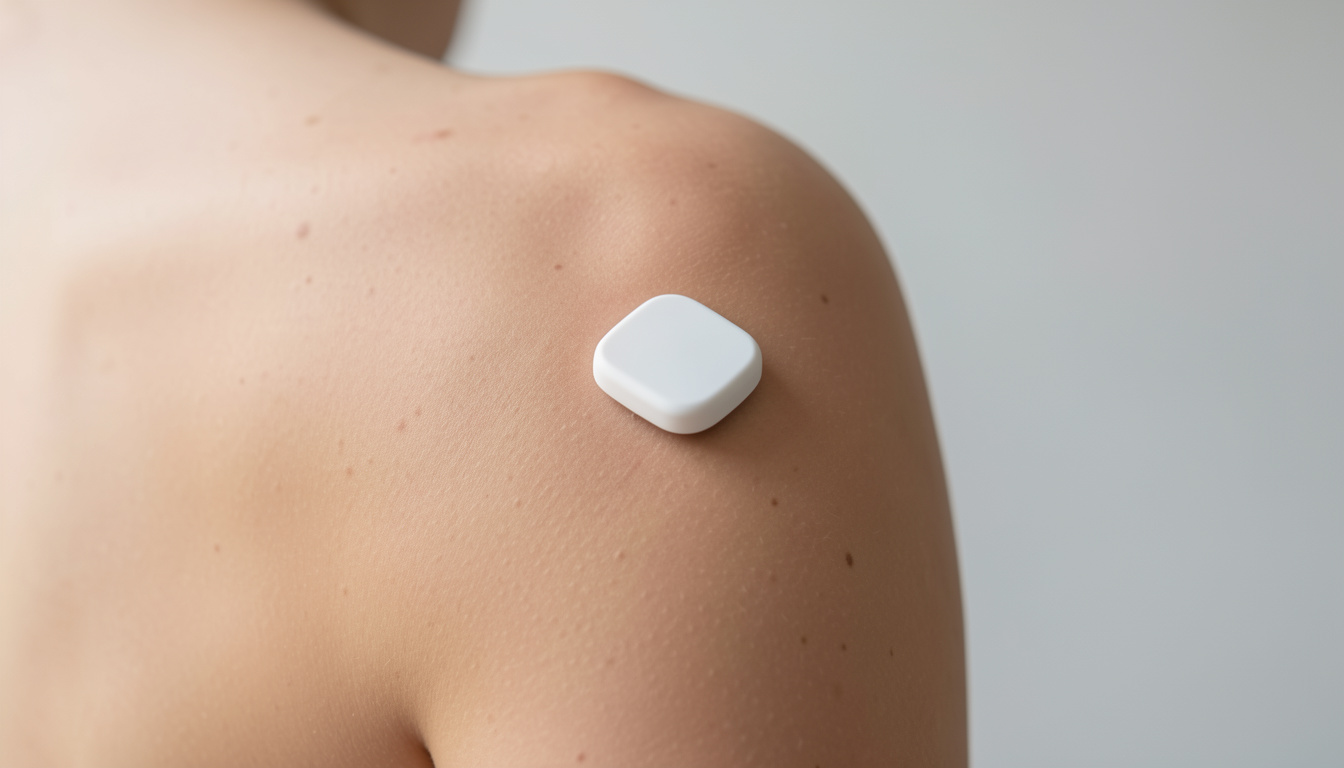
Best over-the-counter CGMs 2026 — Stelo vs Lingo for non-diabetics
Continuous glucose monitors went prescription-free in 2024, and two options now dominate the non-diabetic market. We compare Dexcom Stelo and Abbott Lingo on published FDA accuracy data, wear time, and cost — and cover who a CGM actually helps if you don't have diabetes.
Until 2024, a continuous glucose monitor required a prescription. Now two devices — Dexcom's Stelo and Abbott's Lingo — are sold over the counter on Amazon to anyone who wants one, no doctor's visit required. Both are the same underlying sensor technology used in Dexcom's and Abbott's prescription diabetes devices, repackaged and FDA-cleared for over-the-counter sale to adults who are not on insulin.
This puts CGM in the same category as sleep trackers and smart rings for this audience: a wearable that turns an invisible physiological variable — in this case, glucose — into a data stream you can act on. The question this review answers is narrower than "which CGM is more accurate for diabetes management," which is a clinical question outside our scope. It's: which of the two OTC options gives a non-diabetic the most useful signal for the least friction, and is the category worth the cost for someone without a diagnosed metabolic condition.
At a glance
| Feature | Dexcom Stelo★ Recommended | Abbott Lingo |
|---|---|---|
| Wear time | Up to 15 days | Up to 14 days |
| Published MARD* | 7.3–9.1% | 8.1–10.7% |
| Cost | ~$89/shipment (2 sensors) subscription, $99 one-time | ~$49/sensor à la carte, cheaper per-sensor in 2-pack |
| Calibration | No fingerstick required | No fingerstick required |
| App | Stelo app (standalone, not Dexcom G-series app) | Lingo app — gamified daily glucose score |
| Waterproof | 8 ft / 24 hr | Shower-safe, not rated for submersion |
| Best for | Lowest published error rate, simplest data view | À la carte buying, food-response coaching features |
*MARD (Mean Absolute Relative Difference) is the industry-standard accuracy metric for CGMs — the average percentage difference between the sensor's reading and a reference blood glucose measurement. Lower is better. These are each manufacturer's own published FDA submission data; because MARD is measured against different reference populations and protocols, the ranges aren't a strict apples-to-apples comparison, but they're the most rigorous number publicly available for either device.
Dexcom Stelo — the accuracy pick
Dexcom Stelo Glucose Biosensor, 2-pack
$89–$99 (2-sensor pack)
FDA-cleared OTC CGM. Up to 15-day wear per sensor, no fingerstick calibration. Standalone Stelo app with 24/7 glucose graphing and pattern insights. Waterproof to 8 ft for 24 hours — safe through showers, sweat, and swimming. Designed for adults 18+ not using insulin.
- ✓Lowest published MARD of the two OTC options — 7.3–9.1% vs Lingo's 8.1–10.7%
- ✓15-day wear per sensor, one extra day over Lingo
- ✓Waterproof to 8 ft / 24 hr — no need to remove for cold plunge or sauna sessions
- ✓Backed by Dexcom's two decades of prescription CGM manufacturing
- ✓Subscription pricing works out to roughly $3/day of wear
Dexcom built Stelo on the same sensor platform as its prescription G7 device, which is the most widely used CGM in the US diabetes market. The Stelo app deliberately strips out the diabetes-specific features (no low/high glucose alarms, no insulin dosing integration) and replaces them with a simpler pattern view aimed at metabolic health rather than disease management — daily glucose graphs, a "time in range" style score, and meal-tagging so you can see the response curve to what you ate.
The one adjustment for people coming from a diabetes-management mindset: Stelo will not alarm you for a low or high reading. It's built for people without diabetes, where the goal is understanding trends over weeks, not real-time safety alerting.
Abbott Lingo — the value and coaching pick
Abbott Lingo Continuous Glucose Monitor, 2-pack
~$49/sensor, lower per-sensor cost in the 2-pack
FDA-cleared OTC CGM built on Abbott's FreeStyle Libre sensor technology. Up to 14-day wear per sensor, no fingerstick calibration. Lingo app scores each day 1–10 based on glucose stability and gives specific food and activity suggestions. Sold à la carte or in multi-packs. Designed for adults 18+ not using insulin.
- ✓Sold individually as well as in packs — lower commitment than a subscription
- ✓Built on Abbott's FreeStyle Libre platform, the most-deployed CGM sensor globally
- ✓App leans further into actionable daily coaching than Stelo's pattern-only view
- ✓HSA/FSA eligible
- ✓No subscription lock-in required to keep using the app between sensors
Lingo's app is the more consumer-facing of the two — it converts glucose stability into a daily 1–10 score and pushes specific suggestions ("try a 10-minute walk after lunch") rather than leaving you to interpret a raw graph. For someone who wants a coach-style nudge rather than raw data to self-interpret, this is the more approachable option, even though its published accuracy trails Stelo's slightly. It is not rated for full submersion the way Stelo is, so remove it (or cover it) before a cold plunge or extended swim.
Does a non-diabetic actually need a CGM?
This is worth answering honestly before spending $50–100/month on one.
Where it's genuinely useful: identifying your personal glycemic response to specific foods and meal compositions. Glucose response to identical meals varies significantly between individuals based on gut microbiome composition, insulin sensitivity, and other factors that a population-average nutrition label cannot capture — this is well-established in the metabolic research literature. A CGM turns "is white rice bad for me" from a guess into a measured answer, specific to your physiology, within a single meal. It's also useful for identifying the effect of meal timing, exercise-before-versus-after-eating, and sleep quality on next-day glucose stability — all measurable within one to two weeks of wear.
Where the value is more marginal: if your diet is already reasonably consistent and you have no metabolic risk factors (family history, elevated A1c, visceral adiposity), a few weeks of CGM data will likely confirm what you already suspected rather than surface anything actionable. The device pays for itself in insight during an initial 2–4 week "discovery" period; ongoing daily wear beyond that has diminishing returns unless you're actively iterating on diet or training changes.
A practical approach: wear one for 2–4 weeks, tag your meals, identify your two or three largest glucose spikes and what caused them, adjust, and confirm the adjustment worked with a second short wear period a few months later. Continuous year-round wear is the exception, not the default, for a metabolically healthy non-diabetic.
Who this is not for
Neither device is a diagnostic tool, and neither should be treated as one:
- People using insulin — both are explicitly FDA-cleared only for adults not using insulin. Insulin dosing requires the alarm and accuracy standards of a prescription CGM, not an OTC wellness device.
- Anyone with symptoms suggesting undiagnosed diabetes (excessive thirst, frequent urination, unexplained weight loss) — see a doctor and get a proper diagnostic workup, not a consumer wearable.
- People prone to disordered eating patterns around food tracking — glucose data is another number that can be over-indexed on. If tracking macros or calories has previously become compulsive, a live glucose graph is worth approaching cautiously, ideally with guidance from a clinician.
For everyone else — the metabolically healthy person who wants to understand their own physiology better — either device delivers a genuinely new data stream that a sleep tracker or heart rate monitor cannot.
As an Amazon Associate, LongevityGearLab earns from qualifying purchases. Prices and availability are accurate as of the date published and may change. This article is not medical advice — consult a healthcare provider before using a glucose monitoring device, particularly if you have or suspect a metabolic condition.