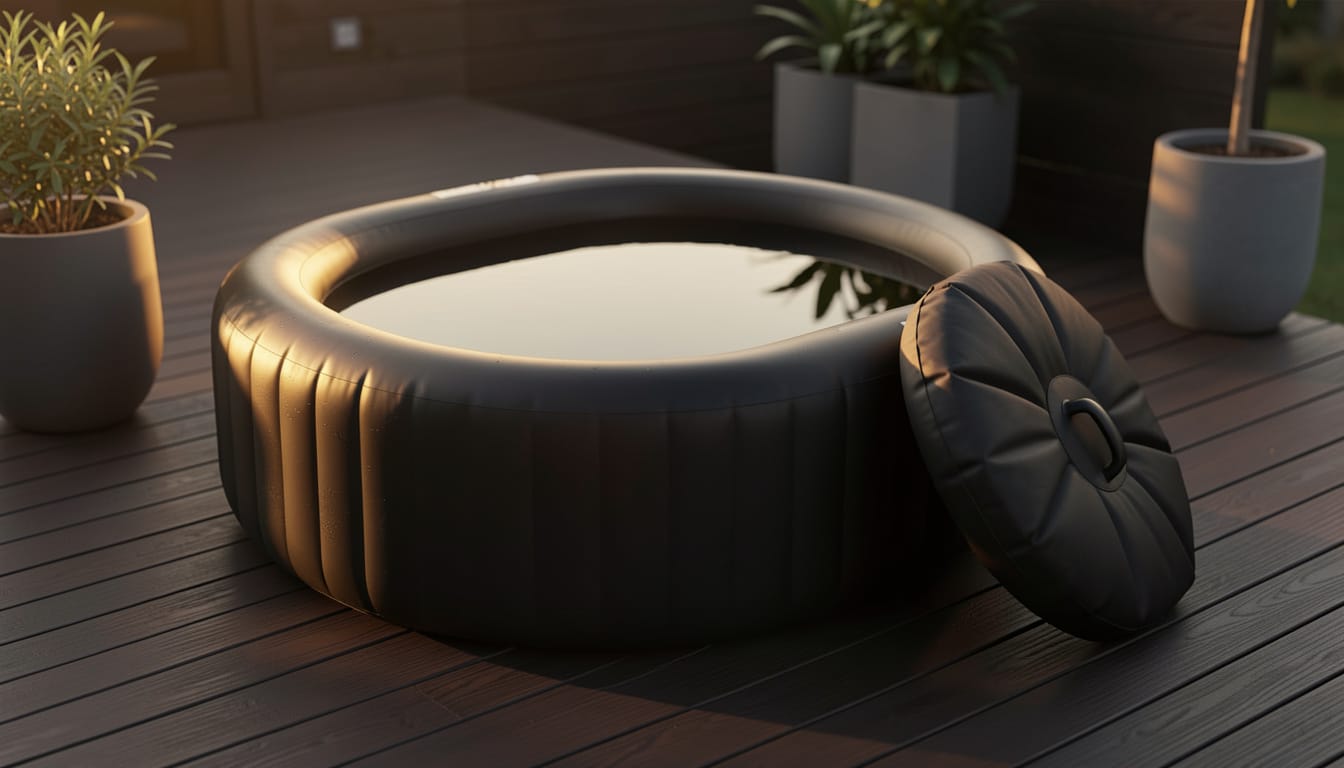
Best inflatable cold plunges on Amazon 2026 — three real options
Inflatable plunge tubs are the easiest way to start cold exposure: no plumbing, no garage required, and they pack away when you're not using them. Here are three Amazon options worth your money — entry, mid, and premium.
If a chest freezer feels like overkill — or you don't have garage space — an inflatable plunge is the other practical option. They take 5 minutes to set up and pack down to a bag when you don't want one in your living room. The tradeoff: you can't keep water cold without either ice or an external chiller, so the running cost is higher than a freezer.
This review picks three Amazon plunges that are actually insulated (a surprising number aren't), have real drain plugs, and are sized for adults — not the bath-tub-shaped novelty units.
At a glance
| Feature | Cold Pod 85 | AKSPORT 151 | OSMOPLUNGE Bundle |
|---|---|---|---|
| Price tier | Entry | Mid | Premium |
| Capacity | 85 gal | 151 gal | 130 gal |
| Cover included | ✓ | — | — |
| Chiller-ready ports | ✗ | ✓ | ✓ |
| Chiller included | ✗ | ✗ | ✓ |
| Temp control | Manual / ice | Add-on chiller | WiFi, ±0.9°F |
| Best for | Testing the habit | Committed users 6'+ | Done-for-you setup |
What to look for
Insulation layers. A single-layer "kiddie pool" style tub will lose plunge temperature in 30 minutes on a 70°F day. Multi-layer tubs (interior PVC, foam insulation, exterior shell) hold cold for 4–6 hours, which means you can chill once and use it for several sessions. All three picks below are multi-layered.
Capacity. Outside dimensions lie — what you actually want is enough water volume to submerge to the collarbone with knees bent. 80–90 gallons fits one adult comfortably; 150+ gallons gives room for taller users to extend their legs.
Drain. Look for a threaded drain at the base, not a screw cap on the side wall. The threaded drain takes a standard garden hose and empties in 5 minutes; the side caps take 20+ minutes and leak.
Lid / cover. A weighted insulated cover is worth ~$30 of the total price. Without one the water warms 8–10°F overnight even with good insulation.
Chiller compatibility. Higher-end units have inlet/outlet ports for an external water chiller. If you plan to plunge daily, a chiller ($300–$700) pays for itself in ice within 6 months. Look for 1.5-inch or 2-inch threaded ports.
Pros
- +No installation, no plumbing, no permanent footprint
- +Packs down to a duffel-bag-sized package
- +Can move outside in summer, inside in winter
- +Lower upfront cost than a chest freezer build
Cons
- −Needs ice or a chiller — running cost is real
- −Materials degrade after 2–3 years of UV exposure
- −Limited size — most units max out around 32 inches interior diameter
- −Less temperature stability than a chest freezer
Verdict: Best for people without permanent space, renters, or anyone who wants to try cold exposure without committing to a chest-freezer install. Pick by capacity and how often you'll use it — entry-level for testing, mid-tier for committed daily users, premium if it's becoming a permanent part of your routine.
Top picks
The Cold Pod 85-Gallon Ice Bath Tub
Cold Pod is one of the most-reviewed inflatable plunges on Amazon for a reason — it's the proven entry point. Multi-layer insulation, 85-gallon capacity sized for solo adult use, and includes a weighted cover. The right pick if you're testing whether you'll stick with cold exposure before committing more money.
- ✓Multi-layer insulation (not a single-wall kiddie pool)
- ✓Cover included — significant for overnight temperature retention
- ✓85 gallons — enough water for one adult to submerge to collarbone
- ✓Established brand with high review volume
AKSPORT 151-Gallon Inflatable Cold Plunge
Step up in capacity (151 gal vs. 85) and explicit chiller compatibility. The larger volume is more comfortable for taller users or anyone who wants to extend their legs, and the chiller-ready inlet/outlet ports mean you can add a recirculating chiller later without buying a different tub. Wood-finish exterior reads better in indoor spaces than plain black PVC.
- ✓151-gallon capacity — comfortable for users over 6'
- ✓Chiller-ready ports — upgrade path without replacing the tub
- ✓Wood-finish exterior for indoor use
- ✓Designed for athlete recovery, not casual use
OSMOPLUNGE All-in-One Cold Plunge System (tub + chiller + step)
The skip-the-upgrade-path pick. Bundles a 130-gallon multi-layer drop-stitch tub, a 1/2 HP WiFi-controlled chiller (37–107°F, ±0.9°F accuracy), and a non-slip inflatable step. The chiller alone runs $400–$700 separately, and the bundle gets you to a fully working setup without sourcing parts. Operates at under 49 dB so it's quiet enough for indoor use.
- ✓Complete bundle — tub + 1/2 HP chiller + step in one purchase
- ✓WiFi app control with ±0.9°F temperature accuracy
- ✓130-gallon multi-layer drop-stitch construction
- ✓Quiet operation (<49 dB) — viable for indoor use
Ice math (because nobody talks about it)
A 90-gallon plunge tub starts at 70°F (room temperature). Cooling it to 50°F requires roughly 50 lbs of ice. At supermarket prices ($3 per 7 lb bag), that's $20+ per session. Over 30 days at 3 sessions a week: **$240 in ice**.
That's why anyone using an inflatable plunge for more than ~6 weeks ends up either:
- Buying a chiller ($300–$700 one-time) — best long-term math
- Switching to a chest freezer build — cheapest if you have space
- Buying a countertop ice maker ($150–$300, makes ~25 lb of ice/day) — middle path
Option 3 is the surprise winner if you can dedicate counter space to it. A residential ice maker pays for itself in 4–6 weeks of regular use vs. supermarket bags.
Getting started
If you haven't done cold exposure before, the protocol matters more than the gear: see How to dose cold exposure. The short version is 50°F for 2–3 minutes, three times a week. That's an achievable target with any of the units above.
Frequently asked questions
Can you leave water in an inflatable cold plunge?
Yes, but only if you're using it regularly and treating the water. Multi-layer insulated tubs hold cold for 4–6 hours and can be left filled for days at a time when paired with a chiller and a sanitizer (chlorine, bromine, or ozone). Without a chiller, plan to drain after each session or every 2–3 sessions — stagnant unchilled water grows biofilm fast.
How cold can an inflatable cold plunge actually get?
With ice alone, 38–45°F is realistic and holds for 30–60 minutes before climbing. With an external chiller, all three options above can hold a target temperature anywhere from ~40°F upward indefinitely. The OSMOPLUNGE bundle is rated to 37°F because of its 1/2 HP chiller.
How long do inflatable cold plunges last?
Two to three years of regular outdoor use is typical before the PVC starts to degrade from UV exposure. Indoor units or units kept covered last longer — five-plus years is reasonable. The chiller, if you add one, will outlast the tub by a wide margin.
Do inflatable cold plunges leak?
Reputable multi-layer drop-stitch tubs (like the three above) rarely leak from the walls — failures usually come from the drain valve or the inflation valve. Side-wall screw-cap drains are the most common leak point; threaded base drains are far more reliable. Inspect seals before each fill.
Can you use an inflatable cold plunge indoors?
Yes, with two caveats: you need a level surface that can support the filled weight (an 85-gallon tub plus a person is ~800 lb), and you need a plan for drainage. A garage with a floor drain is ideal. The OSMOPLUNGE is the only option above that's quiet enough (under 49 dB) for indoor living-space use with the chiller running.
How much ice do you need to chill one?
A 90-gallon tub at 70°F room temperature needs roughly 50 lb of ice to reach 50°F. At supermarket bag prices that's $20+ per session. A countertop ice maker ($150–$300) or an external chiller ($300–$700) pays for itself within 6 weeks of regular use — see the ice math section above.
Inflatable plunge or chest freezer — which is better?
Inflatable is better if you rent, lack garage space, or aren't sure you'll stick with cold exposure long-term. A chest freezer build is better if you have permanent space and plan to plunge daily for years — running cost is lower and temperature stability is higher. See the chest freezer comparison for the full head-to-head.