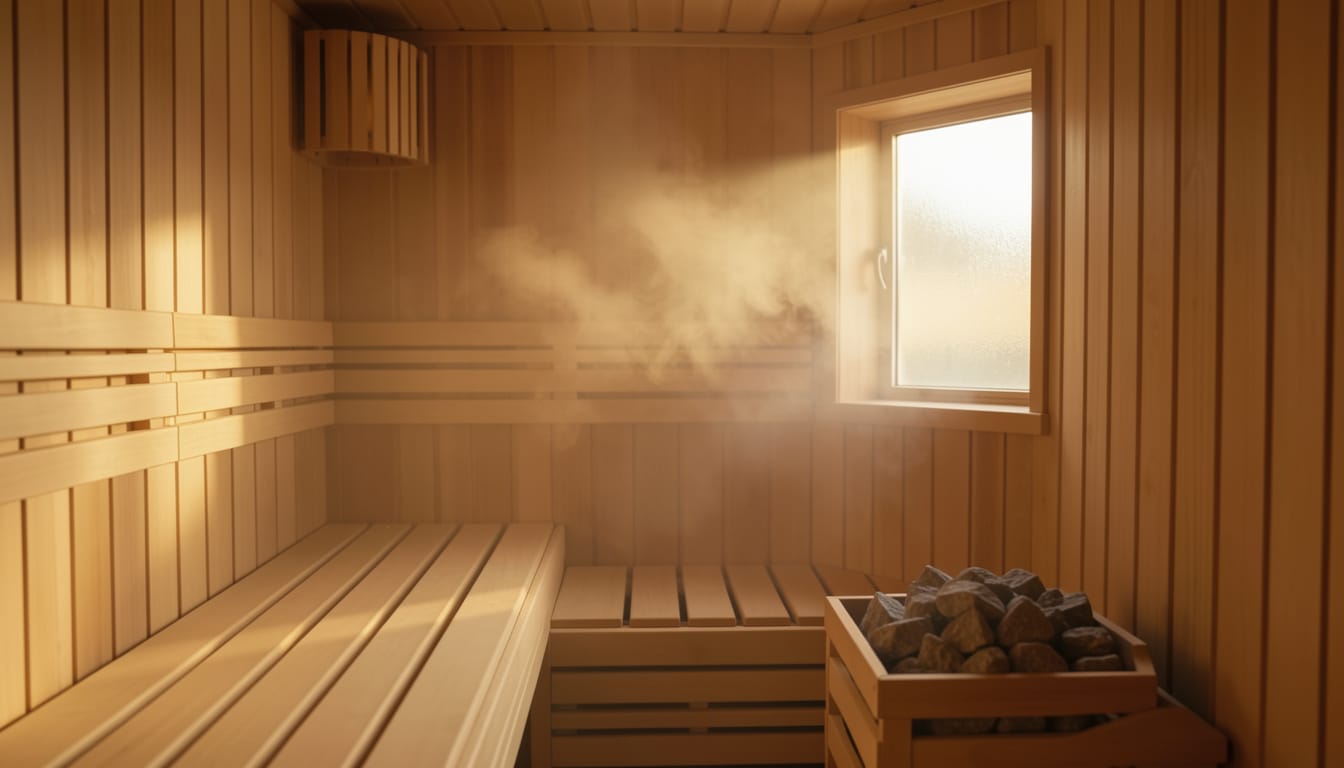
Sauna for longevity: what the Finnish cohort data actually shows
The most compelling epidemiological evidence for a single lifestyle intervention on cardiovascular mortality comes from a 20-year Finnish cohort study tracking 2,300 men and their sauna habits. Here is what the research shows, what it doesn't, and what an evidence-based sauna protocol looks like.
The longevity evidence for sauna use is stronger than for almost any other single lifestyle intervention. This is not a wellness industry claim — it is the conclusion of a 20-year prospective cohort study published in JAMA Internal Medicine tracking 2,300 Finnish men and their sauna habits across two decades.
The findings were dose-dependent and statistically robust: compared to men who used a sauna once weekly, those using a sauna four to seven times per week showed approximately a 50% reduction in cardiovascular disease mortality and a 40% reduction in all-cause mortality. These effect sizes are comparable to or exceed those seen with moderate aerobic exercise in similar cohort analyses.
This article covers the mechanisms behind these findings, what the evidence actually supports versus what is extrapolated, and how to structure a sauna protocol that delivers the documented benefits at home.
The Finnish cohort data — what it shows
The Kuopio Ischaemic Heart Disease Risk Factor Study, published in JAMA Internal Medicine in 2015 by Laukkanen et al., followed 2,315 middle-aged Finnish men over 20 years. Sauna sessions in this cohort were traditional Finnish sauna — dry heat at 175–212°F (80–100°C) for typically 15–20 minutes per session.
The dose-response relationship across cardiovascular mortality:
| Frequency | CVD mortality risk (vs once/week) |
|---|---|
| Once per week | Baseline |
| 2–3 times per week | ~27% reduction |
| 4–7 times per week | ~50% reduction |
All-cause mortality followed a similar pattern. Stroke risk was also reduced, with a separate analysis finding approximately 61% lower stroke risk in the 4–7 session per week group.
What the study cannot establish: causality. Cohort studies identify associations, not mechanisms. Men who use saunas four to seven times weekly in Finland may differ from once-weekly users in ways that explain the mortality difference beyond sauna use itself — diet, social connection, general health-consciousness. The researchers controlled for known confounders (smoking, cardiovascular risk factors, socioeconomic status), but residual confounding cannot be ruled out.
What strengthens the case: the dose-response relationship, the consistency with mechanistic research, and the replication in subsequent analyses including a 15-year follow-up in women showing similar associations. Dose-response relationships are one of the more reliable indicators that an association reflects a real causal mechanism rather than confounding.
The mechanisms — what is happening physiologically
Cardiovascular conditioning
A 20-minute Finnish sauna session at 80°C produces a cardiovascular response resembling moderate-intensity aerobic exercise. Heart rate increases to 100–150 BPM. Cardiac output doubles. Peripheral vasodilation routes blood to the skin surface for heat dissipation. Blood pressure transiently rises then falls below baseline during recovery.
Repeated exposure produces adaptations comparable to aerobic training: improved arterial compliance, reduced resting heart rate, endothelial adaptations that improve vascular function. This mechanism is particularly relevant for individuals who cannot achieve sufficient aerobic conditioning through exercise — sauna provides a cardiovascular stimulus through a different pathway.
Heat shock proteins
Elevated core temperature induces the expression of heat shock proteins (HSPs), particularly HSP70 and HSP90. These molecular chaperones assist in protein folding, prevent protein aggregation under thermal stress, and participate in cellular repair processes. HSP induction is one of the proposed mechanisms for sauna's cardiovascular benefits — HSPs have direct cardioprotective effects in animal models and in human cardiac tissue.
The threshold for meaningful HSP induction in humans is approximately 38.5°C (101.3°F) core temperature, which is typically reached within 15–20 minutes at Finnish sauna temperatures. Infrared sauna blankets at 150–175°F can achieve this threshold, though the timeline is longer than traditional saunas because of the lower ambient temperature.
BDNF and neurological effects
Brain-derived neurotrophic factor (BDNF) is upregulated by thermal stress. BDNF promotes neuronal survival, synaptic plasticity, and the formation of new neural connections — it is one of the primary molecular mediators of exercise's cognitive benefits. Sauna use produces BDNF elevations that may contribute to the mood improvements and cognitive clarity consistently reported by practitioners.
This mechanism also partially explains why sauna and exercise interact positively — both stimulate BDNF through different but additive pathways.
Growth hormone
Sauna sessions produce acute elevations in human growth hormone (HGH). A study by Leppäluoto et al. found that twice-weekly sauna sessions over three weeks elevated growth hormone levels significantly above baseline. HGH participates in muscle repair, fat metabolism, and tissue regeneration. The magnitude of elevation is smaller than that produced by high-intensity exercise but operates through a different, complementary pathway.
What the evidence does not support
Detoxification claims. Sweating does produce some elimination of trace minerals, water-soluble compounds, and small quantities of certain environmental chemicals. The marketing claim that sauna produces significant "detoxification" is not supported by the toxicology literature. The liver and kidneys are the primary detoxification organs; the quantities of any toxin eliminated through sweat are physiologically trivial relative to these organs' capacity.
Weight loss. Any weight loss immediately after a sauna session is water weight from sweating, restored completely by rehydration. Sauna does not produce meaningful fat loss directly. The cardiovascular conditioning effects may contribute to metabolic improvements that support body composition over time, but this is indirect and modest.
Cancer prevention beyond cardiovascular. The mortality data shows cardiovascular benefits most robustly. Claims of direct anti-cancer effects from sauna use are extrapolated from mechanistic research (HSP activity, immune function) rather than supported by longitudinal outcome data.
Building an evidence-based sauna protocol
The Finnish cohort used traditional Finnish sauna at 175–212°F for 15–20 minutes, typically post-exercise. Translating this to a home protocol:
Temperature
Traditional Finnish sauna (optimal): 175–210°F (80–100°C). This is the temperature range used in the research showing cardiovascular mortality benefits.
Infrared sauna blanket: 150–175°F. Somewhat lower than traditional sauna but sufficient for heat shock protein induction and cardiovascular stimulus. Effective as a substitute when traditional sauna access is not available.
The threshold that matters: enough heat to produce sweating within 10–15 minutes and maintain a heart rate of 100–130 BPM during the session. Below this threshold, the cardiovascular conditioning mechanism is attenuated.
Duration
Per session: 15–20 minutes is the duration used in the cardiovascular mortality research. Longer sessions (25–30 minutes) provide incremental benefit in HSP induction but meaningfully increase dehydration risk. The relationship between session duration and benefit is not linear — diminishing returns apply above 20 minutes.
Beginners: start with 8–10 minutes and build to 15–20 over 2–3 weeks. The thermoregulatory system adapts quickly but benefits from progressive introduction.
Frequency
The cardiovascular mortality data shows the largest benefit at 4–7 sessions per week. The practical minimum for meaningful adaptation is 3 sessions per week, which is achievable with a home setup.
The 2–3 times weekly group showed approximately 27% cardiovascular mortality reduction — still significant and a reasonable target for practitioners with competing time demands.
Timing
Post-exercise: combining sauna with exercise amplifies the cardiovascular and BDNF stimulus. Used within 30–60 minutes post-workout, sauna adds to the adaptive signal without interfering with recovery.
Pre-sleep (for contrast therapy): used 60–90 minutes before sleep followed by cold exposure — as covered in the contrast therapy guide — this is one of the most effective sleep onset protocols available. The heat-to-cold sequence accelerates the core temperature drop that triggers sleep onset.
Morning use: viable but less well-studied than post-exercise use. Many practitioners prefer morning sauna for the mood and cognitive effects (BDNF, growth hormone).
Hydration
Dehydration is the primary risk of regular sauna use. A 30-minute session at Finnish sauna temperatures produces approximately 500ml–1,000ml of sweat. Replace fluid with water or an electrolyte drink before, during (if session exceeds 20 minutes), and after each session.
Signs of inadequate hydration: dizziness on standing after a session, headache in the hours following, dark urine. These indicate you are not replacing enough fluid for your session intensity and frequency.
Sauna and cold plunge — the complete protocol
For practitioners combining sauna with cold exposure, the sequence covered in the contrast therapy article applies directly: always end with cold. The cardiovascular vascular pumping mechanism is maximised when cold exposure follows heat, not when heat follows cold.
A standard weekly schedule combining both:
- Monday/Wednesday/Friday: post-workout sauna (15–20 min) → cold plunge (2–3 min)
- Tuesday/Thursday: cold plunge only (3 min morning, per the morning protocol)
- Saturday: sauna + 2–3 contrast cycles if time allows
- Sunday: rest
This schedule provides approximately 5 sauna sessions and 6–7 cold exposure sessions per week — within the range showing the most robust mortality benefits in the cohort data.
Contraindications
Sauna use is contraindicated without medical clearance for people with:
- Cardiovascular disease or recent cardiac events
- Uncontrolled hypertension
- Hypotension or orthostatic hypotension
- Pregnancy
- Active skin conditions that are exacerbated by heat (certain eczema presentations, active rosacea flares)
- Alcohol consumption — sauna while intoxicated significantly elevates dehydration and cardiovascular risk
For healthy individuals without these conditions, sauna use at the documented frequencies is well-tolerated and has a strong safety profile in the research literature.
Equipment for home use
For practitioners building a home heat therapy setup, two options cover the range:
For the blanket format: the HigherDOSE V4 is the benchmark, covered in our sauna blanket buying guide. Published third-party safety testing and the most consistent temperature performance in the category.
For a more traditional experience: a portable sauna tent ($300–$800) allows seated use with full-body infrared exposure and is better suited to the sauna-to-cold-plunge transition in contrast therapy. A dedicated tent guide is in progress.
The gap between either format and a traditional Finnish sauna is real — the cardiovascular stimulus is somewhat lower at infrared blanket temperatures — but the gap between using an infrared blanket 4–5 times weekly and not having sauna access at all is significantly larger. Home equipment enables the frequency that the longevity data supports. Waiting for gym or spa access limits you to once or twice weekly at best.
As an Amazon Associate, LongevityGearLab earns from qualifying purchases. Prices and availability are accurate as of the date published and may change.