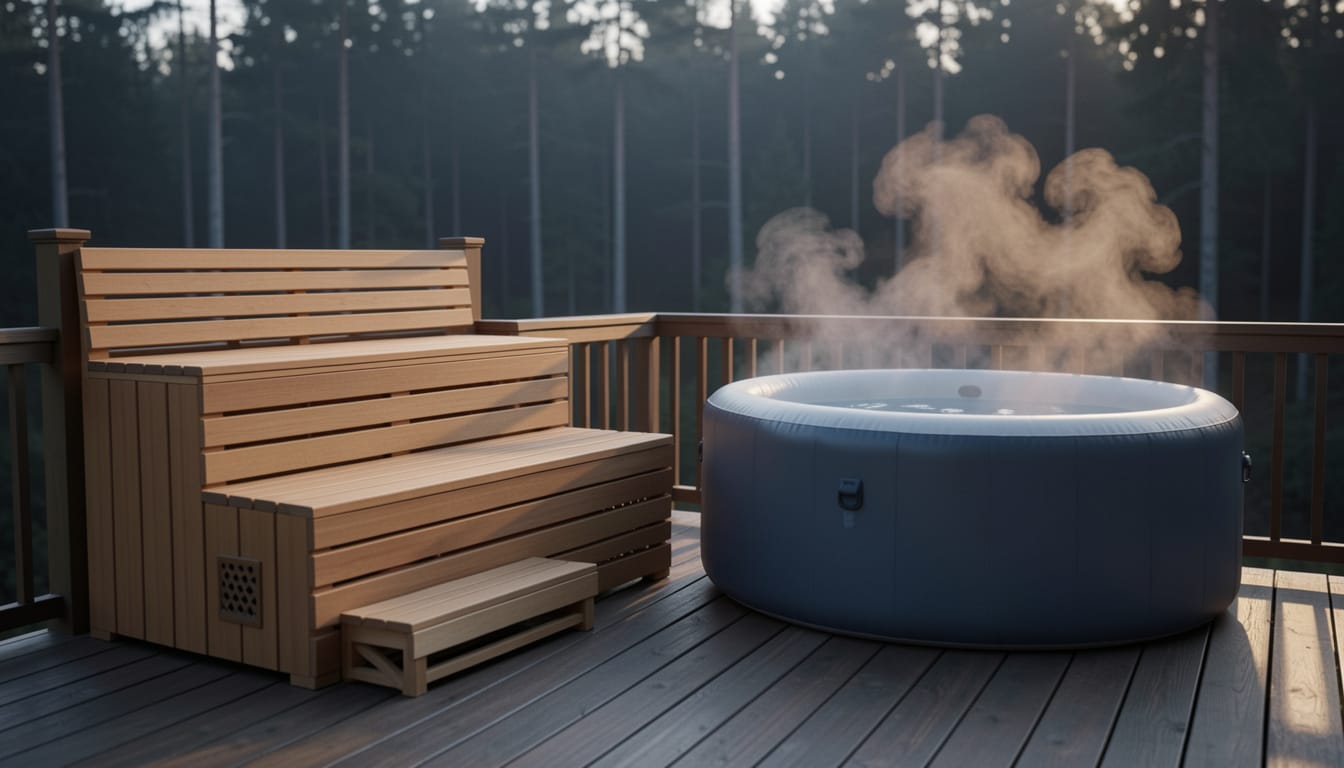
Cold plunge and sauna contrast therapy: the protocol and what the science says
Hot-cold cycling produces cardiovascular and recovery adaptations that exceed either modality alone. Here's the evidence for contrast therapy, the correct sequencing, and how to set up an effective protocol at home.
Cold plunging and sauna use each have well-established independent evidence bases. What is less commonly understood is that alternating between the two — contrast therapy, also called hot-cold cycling — produces a distinct set of cardiovascular and autonomic adaptations that neither modality reliably achieves alone.
This is not a synergy claim built on speculation. The mechanism is specific, the research is reasonably robust, and the protocol variables — temperature, duration, sequencing, and frequency — affect outcomes in ways that matter if you are doing this seriously.
The mechanism: why alternating heat and cold produces different effects
Heat exposure in a sauna causes vasodilation — blood vessels near the skin surface dilate, cardiac output increases significantly, heart rate rises, and the body works to dissipate heat through the skin surface. Core temperature rises. The cardiovascular system is under sustained moderate stress that resembles, metabolically and physiologically, a moderate-intensity aerobic exercise bout.
Cold water immersion immediately following heat exposure causes vasoconstriction — the opposite response. Blood is rapidly redirected from the periphery to the core. Heart rate drops sharply from the sauna-elevated level. Blood pressure spikes transiently then stabilises. The transition from vasoconstriction to vasodilation produces a "vascular pumping" effect as the body cycles between the two states.
This rapid alternation between vasodilation and vasoconstriction is the mechanism that distinguishes contrast therapy from either modality alone. It produces:
Endothelial adaptation. The repeated mechanical stress of vascular expansion and contraction stimulates endothelial cells — the cells lining blood vessel walls — to upregulate nitric oxide production and improve vascular compliance. This is analogous to the vascular adaptations produced by aerobic exercise, and the evidence suggests contrast therapy can produce similar endothelial improvements in individuals who cannot exercise at sufficient intensity for cardiovascular conditioning.
Enhanced circulation and metabolic waste clearance. The pumping mechanism accelerates the movement of metabolic byproducts — lactate, inflammatory cytokines, extracellular fluid — out of muscle tissue. This is the primary mechanism behind contrast therapy's well-documented effect on delayed-onset muscle soreness (DOMS) recovery.
Autonomic nervous system training. Repeatedly transitioning between high sympathetic tone (heat) and high parasympathetic tone (cold) trains the autonomic nervous system's capacity to switch between states efficiently. Over weeks of consistent practice, this is measurable in resting HRV — the autonomic variability that reflects recovery capacity.
What the research shows
The strongest evidence for contrast therapy covers three domains:
DOMS reduction and recovery speed. A 2017 meta-analysis published in the British Journal of Sports Medicine found that contrast water therapy significantly reduced muscle soreness at 24, 48, and 72 hours post-exercise compared to passive recovery. The effect size was larger than cold water immersion alone. The vascular pumping mechanism is the most likely explanation.
Cardiovascular adaptations. Studies on repeated sauna use — particularly the Finnish cohort data published in JAMA Internal Medicine tracking 2,300 men over 20 years — show dose-dependent reductions in cardiovascular mortality with regular sauna use (4–7 sessions per week showed roughly 50% reduction in cardiovascular disease mortality compared to once-weekly use). Contrast therapy is understudied relative to sauna alone, but the endothelial adaptation mechanism suggests additive rather than redundant cardiovascular benefit.
Mood and norepinephrine response. Research by Dr. Rhonda Patrick and others documents significant norepinephrine elevation with both sauna use and cold exposure. The sequential application of both may produce a more sustained elevation than either alone, though this specific interaction is understudied.
Sequencing: always end with cold
The sequencing question — sauna first or cold first — has a clear answer with a clear mechanism.
Always end with cold. Never end with sauna.
The reason is twofold. First, the cold plunge after sauna takes advantage of the vasodilated, heat-expanded vascular state — the contrast effect is maximised when the cold exposure occurs in a body with high peripheral blood volume and elevated core temperature. Cold plunging from a baseline state is less dramatic and less effective at triggering the vascular pumping mechanism.
Second, ending with heat re-elevates core temperature and activates the sympathetic nervous system — counterproductive if the session is in the evening and you want the parasympathetic shift that supports sleep onset. Ending with cold produces the parasympathetic shift that makes contrast therapy compatible with evening use for sleep improvement.
The standard sequence for one cycle:
- Sauna: 15–20 minutes at 176–212°F (80–100°C)
- Cold plunge or cold shower: 2–3 minutes at 50–59°F (10–15°C)
- Rest at room temperature: 5–10 minutes (optional recovery between cycles)
- Repeat cycles as desired
- Final exposure: cold — always
Protocol variables
Temperature
Sauna temperature: 176–212°F (80–100°C) is the range used in Finnish sauna research showing cardiovascular benefit. Below 170°F, the cardiovascular and heat shock protein responses are attenuated. A traditional Finnish sauna, infrared sauna, or sauna blanket at the upper end of its temperature range are all appropriate.
Cold temperature: 50–59°F (10–15°C) for the plunge phase. The contrast effect does not require the coldest possible water — the mechanism operates on the temperature differential between the sauna phase and the cold phase, not on the absolute cold temperature. 55°F after a 200°F sauna is a more extreme contrast than 40°F from a baseline.
Duration per phase
Sauna: 12–20 minutes per cycle. Under 10 minutes limits the degree of vasodilation and heat shock protein induction. Over 25 minutes without hydration increases dehydration risk.
Cold: 2–3 minutes. As covered in our cold plunge dosing guide, longer sessions do not proportionally increase benefit. For contrast therapy specifically, the cold phase is a trigger — the vasodilation-to-vasoconstriction transition — not a primary stimulus requiring maximum duration.
Number of cycles
2–3 cycles per session is the standard protocol. One cycle produces benefit; three cycles maximise the cardiovascular training effect without extending the session to an impractical length. Most practitioners do:
- Cycle 1: Sauna 15 min → Cold 2–3 min
- Cycle 2: Sauna 15 min → Cold 2–3 min
- Cycle 3: Sauna 10 min → Cold 3 min (final cold)
Total session time: approximately 60–75 minutes including transition time.
Frequency
2–3 sessions per week is sufficient for the cardiovascular and recovery adaptations. Daily contrast therapy is practised by many and is generally well-tolerated, but the marginal gain from daily versus 3x/week use is small relative to the time investment.
Home setup options
The main constraint for home contrast therapy is having both a heat source and a cold source accessible within a short walk. Transitioning between environments matters — the benefit of the vascular contrast decreases if you spend 10 minutes walking between a sauna and a cold plunge.
Cold side: any of the inflatable cold plunge tubs covered in our buying guide works for the cold phase. A chiller-equipped tub is preferable since it maintains temperature across multiple sessions and cycles without needing ice replenishment. See our chiller vs ice breakdown for the cost comparison.
Heat side: several options at different price points:
Infrared sauna blanket ($150–$400): the most accessible entry point. Reaches 140–160°F (60–70°C) — lower than traditional sauna but sufficient for heat shock protein induction and cardiovascular stress. The limitation is full-body coverage requires lying down, which is impractical for transitions. Good for standalone sauna use; less convenient for rapid contrast cycling.
Portable infrared sauna tent ($300–$800): seated position, reaches 140–160°F, full-body exposure except the head. More practical for contrast cycling than a blanket — you can exit quickly. Available on Amazon with varying quality.
Traditional barrel or indoor sauna ($2,000–$8,000+): the optimal setup for contrast therapy at home. Reaches full temperature (176–212°F), accommodates multiple people, and is adjacent to an outdoor cold plunge in many setups. Significant investment but provides the full temperature differential for maximum contrast effect.
Pros
- +Vascular pumping produces cardiovascular adaptations not reliably achieved by either modality alone
- +DOMS reduction is the most robustly evidenced practical benefit — measurably faster recovery
- +Compatible with existing cold plunge setup — only the heat source needs to be added
- +Scalable from sauna blanket to full outdoor sauna depending on investment level
Cons
- −Requires two pieces of equipment in close proximity — transition time between modalities reduces contrast effect
- −A proper sauna at full temperature (180°F+) is expensive to install at home
- −Dehydration risk is elevated versus cold plunge alone — consume 500ml water before sessions
- −Contraindicated for people with cardiovascular disease, uncontrolled hypertension, or pregnancy
Verdict: Contrast therapy is the most effective single protocol for combining cardiovascular conditioning and acute recovery support. The practical barrier is equipment — a sauna blanket or tent plus an inflatable cold plunge tub is the minimum viable home setup. Sequence always ends cold. Never end with heat.
Contrast therapy and the cold plunge protocol
If you are already following a cold plunge protocol — morning sessions for the norepinephrine and alertness effects — contrast therapy is a separate use case rather than a replacement.
Morning cold plunge: 2–3 minutes at 50–55°F, no heat exposure, for the autonomic and dopamine response.
Evening or post-workout contrast therapy: 2–3 cycles of sauna + cold, ending with cold, for cardiovascular conditioning and recovery.
These can coexist in a weekly schedule without conflict. The cold plunge morning sessions stay as a standalone habit; contrast therapy sessions are added on 2–3 days per week, typically after training days where DOMS reduction and recovery speed are the primary goals.
What comes next in this category
The natural extension of contrast therapy is a dedicated sauna review — which portable sauna tents and infrared blankets on Amazon are worth buying, what the temperature and EMF specs look like, and where the price-to-performance curve flattens. That review is in progress for LongevityGearLab.
In the meantime, the cold plunge setup — which you already need for contrast therapy — is covered in our complete inflatable cold plunge buying guide.
As an Amazon Associate, LongevityGearLab earns from qualifying purchases. Prices and availability are accurate as of the date published and may change.