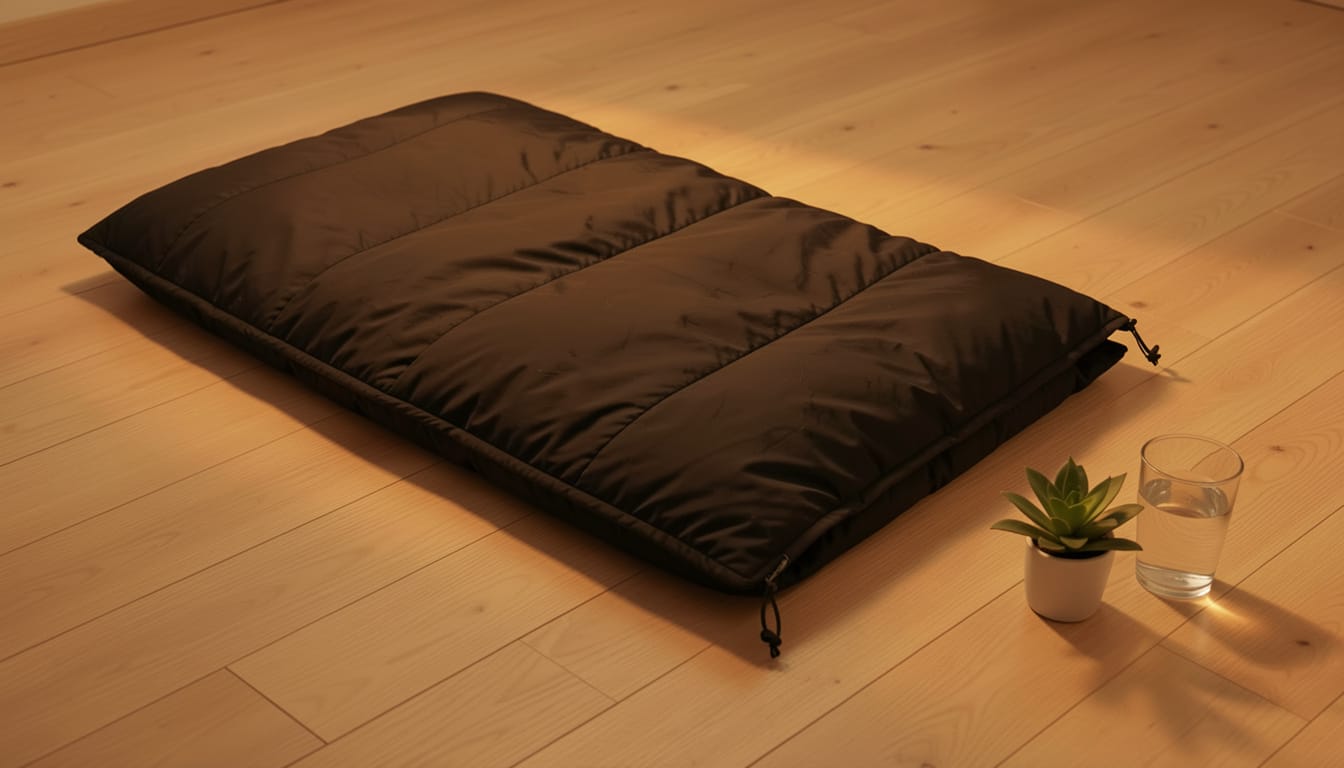
Best infrared sauna blankets 2026 — ranked by EMF testing, temperature, and build quality
The sauna blanket market has a safety problem that most reviews ignore. Two products were recalled in 2026 for burn injuries and overheating. This review ranks the remaining field by the specifications that determine whether a blanket is safe and effective: published EMF data, maximum temperature, and build quality.
The infrared sauna blanket category has grown rapidly enough that quality control has not kept pace with consumer demand. Two products were recalled in 2026 for serious safety issues: the Bluzen Infrared Sauna Blanket was recalled in the UK for overheating and melting risk, and LifePro recalled 78,000 units of its Bioremedy model in the United States following consumer-reported burn injuries. Neither of these events appears in most sauna blanket buying guides published in the past 12 months.
This review begins there because it is the most important thing to communicate about this product category: not all infrared sauna blankets are safe, and the specifications that indicate safety — published third-party EMF testing, VOC testing, maximum temperature accuracy, and build quality — are rarely discussed in marketing material.
The review applies one non-negotiable filter: only blankets with published third-party EMF testing are recommended. Self-reported EMF claims are unverifiable and meaningless for safety assessment purposes.
How infrared sauna blankets work
Infrared sauna blankets use far-infrared heating elements — typically carbon fiber, or crystal and mineral combinations — to generate radiant heat that is absorbed directly by the body rather than heating the surrounding air. This differs from traditional Finnish saunas, which heat the air to 175–210°F. Infrared blankets operate at lower ambient temperatures (typically 130–175°F) while producing similar physiological responses because the infrared wavelengths penetrate tissue more directly.
The physiological mechanisms are the same as those covered in our contrast therapy article: heat shock protein induction, cardiovascular conditioning through sustained elevated heart rate, and the endothelial adaptations that come from repeated vasodilation. The blanket format adds one specific advantage over traditional saunas: the ability to use the protocol at home without dedicated infrastructure, making 3–5 session-per-week consistency achievable for most people.
The one meaningful limitation versus a traditional sauna: the head remains outside the blanket, which means the cardiovascular stimulus is somewhat less than full-body immersion. For contrast therapy where maximising the heat-cold differential is the goal, a blanket is a functional substitute; for the maximum cardiovascular conditioning stimulus, a traditional sauna or sauna tent is preferable.
The EMF question — why it matters and what to look for
All electrical heating devices emit electromagnetic fields (EMF). The relevant question for a device used in direct skin contact for 30–60 minutes per session is not whether EMF is present — it is — but what the intensity is and whether it has been measured independently.
The international standard most commonly referenced for safe EMF exposure is the ICNIRP guideline, which sets a public exposure limit of 200 mG (milligauss) for the frequency range produced by infrared blankets. Most sauna blanket brands claim their products are "low EMF" without publishing the measurement methodology or specific readings.
Third-party EMF testing, conducted by an independent laboratory with results published by the brand, is the only meaningful safety signal. It confirms both the intensity of EMF at skin contact distance and the measurement methodology used. Without it, "low EMF" is a marketing claim.
The recall context: the LifePro Bioremedy recall was related to electrical safety and burn injury risk, not specifically EMF. However, it illustrates the broader quality control issue in the category — brands that do not invest in independent safety testing across multiple parameters are more likely to have undetected risks in any dimension.
Top picks
Best overall: HigherDOSE Infrared Sauna Blanket V4
HigherDOSE is the only sauna blanket brand that publishes third-party VOC testing (volatile organic compounds from the heated materials) in addition to EMF testing. It is also the only brand in the category where independent reviewers have measured EMF readings and confirmed they match published specifications. The V4 iteration has the fastest heat-up time of any blanket tested in independent comparisons — 8–10 minutes to maximum temperature — and reaches 175°F, which is within the range of a conventional Finnish sauna.
The internal layering system uses amethyst, tourmaline, charcoal, and clay, combined with far-infrared carbon fiber heating elements. The crystal and mineral components emit negative ions and far-infrared radiation independently of the electric heating element — a genuine differentiation from blankets that use only carbon fiber. Whether the negative ion generation produces measurable health benefit at typical exposure durations is less well-evidenced than the infrared mechanism, but it does not detract from the primary infrared benefit.
Build quality is the second differentiator. The PU leather exterior is non-toxic, wipes clean easily, and uses reinforced zipper construction that holds over repeated use. Cheaper blankets in the category use thinner materials that crack at fold points within months of regular use.
HigherDOSE Infrared Sauna Blanket V4
$599–$699
Far infrared sauna blanket with published third-party EMF and VOC testing. Amethyst, tourmaline, charcoal, and clay internal layers with carbon fiber heating. Reaches 175°F in 8–10 minutes. 9 heat levels. Reinforced industrial zipper. Non-toxic PU leather exterior. Machine-washable insert available separately.
- ✓Third-party EMF and VOC testing published — the only brand in the category with both
- ✓Fastest heat-up time tested: 8–10 minutes to maximum temperature
- ✓Crystal and mineral internal layers differentiate from carbon-fiber-only alternatives
- ✓Reinforced build quality — holds up to daily use without cracking at fold points
Who it is for: practitioners who use a sauna blanket as a primary heat therapy tool 3–5 times per week, those who prioritise safety documentation, and anyone who wants the closest equivalent to a traditional sauna in a portable format.
The limitation: at $599–$699, it is the most expensive Amazon-available sauna blanket. The price reflects genuine quality differentials in materials and safety testing, but it is a significant investment. For practitioners unsure whether they will maintain the habit, the LifePro below provides a lower-risk entry point.
Best value: LifePro RejuvaWrap
Before addressing the LifePro recommendation, the recall situation needs to be stated clearly: LifePro recalled 78,000 units of their Bioremedy model in 2025 due to burn injury reports. The RejuvaWrap is a distinct product with a different build and materials. The recall applies to the Bioremedy, not the RejuvaWrap. Independent testing in 2026 of the RejuvaWrap has not identified the same issues.
With that context established: the RejuvaWrap is the strongest value proposition in the sauna blanket category for its price. It reaches 176°F — one degree above the HigherDOSE — which makes it the hottest available blanket at this price point. The carbon fiber heating element uses 9 temperature levels, includes a waterproof interior (important for sweat management during sessions), and comes with a carry bag for storage and portability.
The primary trade-off versus HigherDOSE is safety documentation. LifePro does not publish third-party EMF or VOC testing to the same standard as HigherDOSE. It claims low EMF, but without independent verification. For practitioners who are specifically concerned about EMF exposure and want documented evidence, the HigherDOSE is the appropriate choice. For practitioners who accept manufacturer claims as adequate for this product category and want maximum temperature at a lower price, the RejuvaWrap is effective.
LifePro RejuvaWrap Infrared Sauna Blanket
$380–$420
Carbon fiber far infrared heating to 176°F. 9 temperature levels. Waterproof interior. 60-minute timer. Includes carry bag, 5 disposable thermal wraps, and head towel. Note: a different LifePro model (Bioremedy) was recalled in 2025 — the RejuvaWrap is a distinct product not subject to that recall.
- ✓Reaches 176°F — the highest maximum temperature at this price point
- ✓Waterproof interior — practical for high-sweat sessions
- ✓Includes carry bag and accessories — better out-of-box completeness than competitors
- ✓$300+ less than HigherDOSE for comparable temperature performance
Brands to avoid
Two specific situations to be aware of:
LifePro Bioremedy / BioRemedy Plus: this specific model was recalled in the US for burn injuries. Do not purchase it. The RejuvaWrap is not subject to this recall.
Bluzen: recalled in the UK in April 2026 for overheating and melting risk. Not available on Amazon US, but appears in some third-party marketplace listings. Avoid.
Any brand without published EMF testing: in the absence of independent measurement data, EMF claims are marketing language. Budget blankets in the $80–$150 range on Amazon from unknown brands consistently fail independent EMF testing when measured. The cost saving is not worth the unknown risk profile for a device used in direct skin contact for 30–60 minutes per session multiple times per week.
How to use an infrared sauna blanket
Preparation:
- Wear light, breathable clothing (long sleeves and leggings) inside the blanket — direct skin contact with the heating elements is not recommended for most blanket designs
- Hydrate with 500ml of water before the session
- Have water or an electrolyte drink accessible during the session
Session protocol:
- Start at a lower heat level (4–5 of 9) for the first two to three sessions to allow thermoregulatory adaptation
- Target 30–45 minutes at your working temperature once adapted
- Do not exceed 60 minutes regardless of experience level
Temperature progression:
- Beginners: start at 130–140°F
- Intermediate: 150–160°F
- Advanced: 165–175°F
Post-session:
- Exit and cool down naturally for 10–15 minutes before showering
- For contrast therapy: cold plunge within 5 minutes of exiting the blanket while core temperature is still elevated — this is where the vascular pumping mechanism is maximised
Cleaning:
- Wipe the interior with a damp cloth after each session
- Do not submerge the blanket in water
- Use the washable cotton towel insert (available separately for HigherDOSE, and disposable inserts included with the RejuvaWrap) to reduce direct sweat contact with the heating surface
Infrared sauna blanket vs sauna tent — which is better?
Both formats achieve the infrared heat therapy goal. The practical differences:
Blanket: lower price, easier storage, portable, suitable for lying down. Head stays outside, which reduces the full-body heat immersion. More intimate skin contact with the heating surface — EMF and VOC quality matters more.
Sauna tent: larger investment ($300–$800), seated position, more traditional sauna experience, head can be inside or outside depending on design. Better for contrast therapy sequencing where standing and moving to a cold plunge quickly is the goal. Less portable.
For practitioners who primarily use heat therapy lying down during rest or recovery, a blanket is more practical. For practitioners building a contrast therapy protocol where rapid transition to a cold plunge is part of the session, a sauna tent's seated position makes the transition faster and easier. Both are addressed in our contrast therapy protocol — see the full contrast therapy guide for sequencing details.
As an Amazon Associate, LongevityGearLab earns from qualifying purchases. Prices and availability are accurate as of the date published and may change.