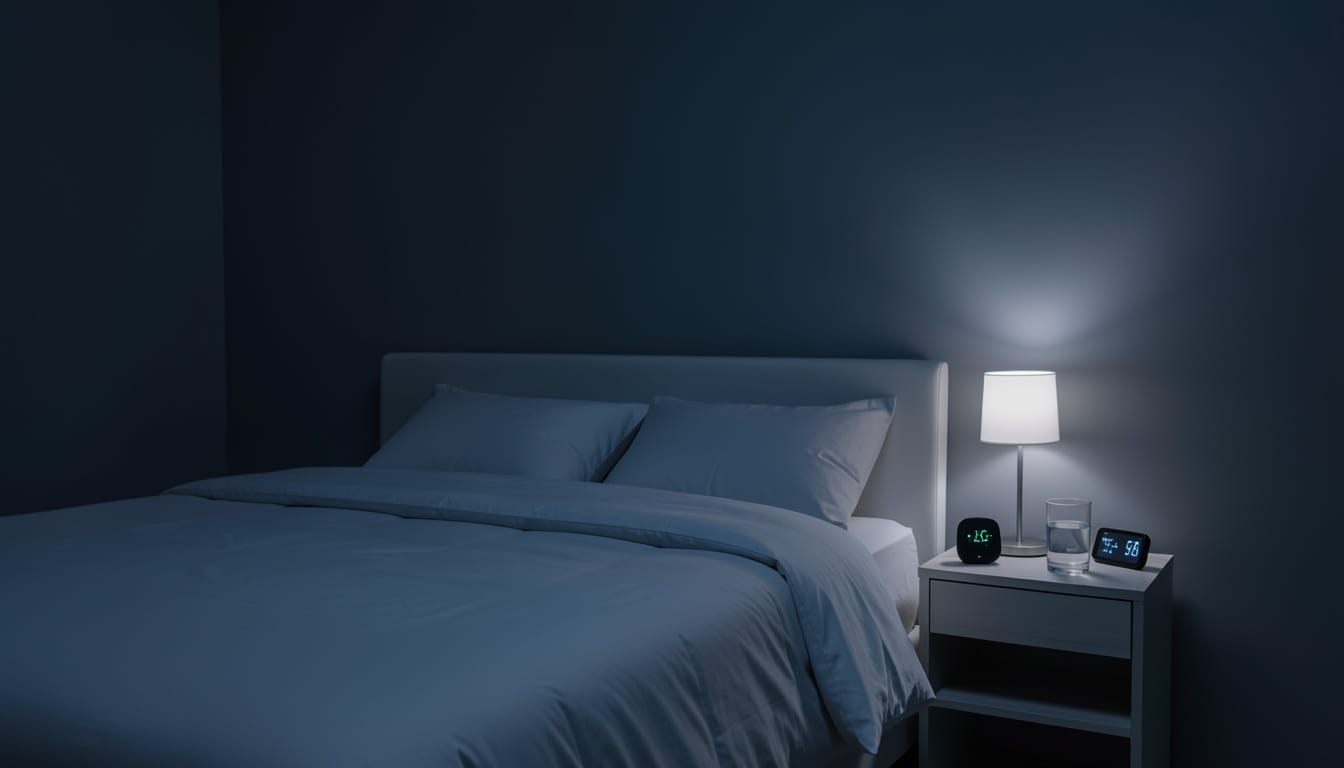
Sleep temperature and recovery: why hot sleepers underperform and what to do about it
Core body temperature drop is the primary trigger for sleep onset and deep sleep maintenance. If you run hot at night, you're not just uncomfortable — you're cutting short the most restorative phases of your sleep cycle. Here's the physiology and the fix.
Sleep is the highest-leverage recovery variable available to anyone serious about physical and cognitive performance. The peer-reviewed literature on sleep deprivation's effects on muscle protein synthesis, HRV, cortisol regulation, and cognitive function is unambiguous — and yet sleep is treated as a passive activity that either happens or it doesn't.
Temperature is the most underappreciated active variable in sleep quality. It is not a comfort preference. It is a physiological trigger that directly governs when you fall asleep, how deeply you sleep, and whether you complete the slow-wave and REM cycles where the majority of physical recovery occurs.
If you wake up hot, kick off covers, or check your Oura or Whoop data and consistently see low HRV and poor deep sleep scores, temperature dysregulation during sleep is the most likely culprit — and it is one of the more straightforward problems to solve.
The core temperature mechanism
The human body needs to drop its core temperature by approximately 1–2°F (0.5–1°C) to initiate sleep onset. This is not incidental — it is a primary biological trigger. The suprachiasmatic nucleus (the brain's circadian clock) coordinates melatonin release with peripheral vasodilation, which dissipates heat from the body surface and drives the core temperature drop that signals sleep to the brain.
Disrupting this drop delays sleep onset. Maintaining elevated core temperature during sleep suppresses slow-wave sleep (SWS), the deepest sleep stage where growth hormone is secreted, muscle repair occurs, and immune function is restored. In studies measuring objective sleep architecture, participants sleeping in environments above 75°F showed measurable reductions in SWS compared to those in the 60–68°F optimal range.
The implication is direct: a hot sleeper is not merely uncomfortable. They are spending less time in the sleep stages where the biological work of recovery actually happens.
Why some people run hotter at night
Thermal dysregulation during sleep has several common causes, each with different mechanisms:
High training load. Intense exercise elevates core temperature and increases metabolic heat production for hours post-exercise. Athletes training in the evening or afternoon frequently enter sleep with a core temperature that has not fully normalised. This is one reason why high-volume training blocks consistently correlate with worsened sleep metrics on wearables — it is not just systemic fatigue but thermal interference with sleep architecture.
Hormonal fluctuation. Oestrogen and progesterone influence the hypothalamic thermostat. Fluctuations across the menstrual cycle, perimenopause, and menopause shift the thermoregulatory set point, making the body more prone to initiating heat dissipation at inappropriate times during the sleep cycle — what manifests as hot flashes and night sweats.
Metabolic rate and body composition. Higher muscle mass generates more resting heat. This is directly relevant for athletes and individuals who have built significant lean mass — they are producing more metabolic heat at rest than a sedentary baseline, and that heat has to go somewhere during sleep.
Bedding that traps heat. Conventional down and synthetic fill comforters trap heat by design — they are insulating materials. For a thermoneutral sleeper in a cold room, this is the point. For a hot sleeper, the same insulation that provides warmth prevents the heat dissipation the body is actively trying to achieve during the night.
What Qmax measures and why it matters
Cooling bedding is a legitimate product category with measurable performance differences, but the marketing language — "cooling technology," "temperature regulating," "breathable" — is largely unstandardised. Without a reference metric, these claims are impossible to evaluate.
Qmax (maximum heat flux) is the relevant measurement. It quantifies the maximum rate at which a fabric transfers heat away from skin at the moment of contact, measured in watts per square metre. Higher Qmax means more heat drawn away from the body more quickly.
Standard cotton sits at approximately Qmax 0.14–0.18. Bamboo-derived fabrics typically range from 0.18–0.25. Purpose-built cooling fabrics using engineered fibre structures reach 0.35–0.50+.
The threshold at which a fabric produces a perceptible cool-to-touch sensation is generally considered Qmax 0.20 or above. Below that, a fabric may breathe better than down but does not produce active cooling sensation. Above 0.35, the cooling effect is immediate and measurable at contact.
This metric is rarely published by bedding brands. When a brand publishes it with a specific figure, it is worth taking seriously.
The sleep environment protocol
Before addressing bedding, the broader sleep environment sets the ceiling on what bedding can achieve. The evidence-based targets:
Room temperature: 60–68°F (15–20°C). This is the range most consistently associated with optimal sleep architecture in the literature. Below 60°F, vasoconstriction in the extremities impairs the peripheral heat dissipation that supports the core temperature drop. Above 68°F, ambient heat prevents the drop from completing fully.
Humidity: below 60%. High humidity impairs evaporative cooling — the body's primary mechanism for dissipating heat through sweating. In humid climates, a dehumidifier in the bedroom produces measurable sleep quality improvements independent of temperature.
Timing of exercise: if you train late and consistently see poor sleep metrics, shifting the workout two hours earlier is the highest-leverage intervention — more impactful than any bedding upgrade. Core temperature peaks approximately 60–90 minutes post-exercise and takes two to four hours to normalise.
Timing of cold plunge: a cold plunge 60–90 minutes before bed accelerates the core temperature drop that triggers sleep onset. This is distinct from the alerting effect of morning cold exposure — the mechanism in the evening is the rebound vasodilation and parasympathetic activation that follows cold exposure, both of which support sleep. See our cold plunge dosing guide for protocol details.
Once the room environment is optimised, bedding choice determines whether you can maintain temperature stability across the full sleep cycle rather than just falling asleep comfortably.
Promeed CoolRest Double Cooling Comforter
The CoolRest addresses the hot sleeper problem through two mechanisms working simultaneously: a cool-touch shell fabric that produces immediate contact cooling, and Ice Velvet™ filling engineered for sustained heat dissipation throughout the night.
The Ice Velvet™ filling is the technically differentiated component. Promeed publishes a Qmax of 0.45 — above the threshold where cooling is perceptible on contact and well above the range where most "cooling" bedding operates in practice. The fibre structure contains 24–36 ventilation pores per fibre, creating airflow channels that wick moisture and dissipate heat continuously rather than accumulating it as conventional fill materials do.
The practical distinction this creates: most cooling comforters feel cool when you first get into bed and gradually warm as body heat saturates the fill material. The porous structure of Ice Velvet™ allows heat to escape rather than accumulate, maintaining the cooling effect through the full sleep cycle — which is where the deep sleep impact is felt.
The comforter is OEKO-TEX Standard 100 certified — confirming no harmful chemicals in the fabric or filling, relevant for athletes, pregnant women, and anyone with skin sensitivity. Machine washable, which matters for a product used by hot sleepers who experience night sweats.
Promeed CoolRest™ Double Cooling Comforter
$89–$139
Ice Velvet™ filling at Qmax 0.45 with 24–36 ventilation pores per fibre. Cool-touch shell for immediate contact cooling. OEKO-TEX certified. Machine washable. Designed for hot sleepers, athletes with elevated resting metabolic heat, and anyone whose wearable data shows thermal disruption affecting deep sleep.
- ✓Qmax 0.45 published — one of the few cooling comforters to disclose this metric
- ✓Ice Velvet™ porous structure dissipates heat throughout the night, not just on initial contact
- ✓OEKO-TEX certified — no harmful chemicals in shell or fill
- ✓Machine washable — practical for regular use by hot sleepers
Who this is for: athletes carrying high training loads, anyone whose Oura or Whoop consistently shows disrupted deep sleep or low HRV without an obvious explanation, people in warm climates where room cooling alone is insufficient, and anyone experiencing hormonal temperature dysregulation.
Who should look elsewhere: cold sleepers or those in environments already below 65°F who need warmth retention rather than heat dissipation. The CoolRest is engineered for the opposite problem.
How bedding interacts with wearable sleep data
If you use a wearable to track sleep, the metrics most sensitive to thermal dysregulation are:
HRV (heart rate variability): thermal stress during sleep activates the sympathetic nervous system, suppressing the parasympathetic tone that produces high HRV. Consistently low HRV with no other obvious cause — adequate training load, no illness, low alcohol — points toward sleep environment quality including temperature.
Deep sleep (slow-wave sleep) duration: this is the metric most directly suppressed by elevated core temperature during sleep. A Qmax improvement in bedding should produce measurable increases in deep sleep duration within one to two weeks of consistent use in thermally disrupted sleepers. This makes it one of the easier sleep interventions to validate through wearable data.
Resting heart rate: resting heart rate is elevated by thermal stress. The body uses cardiovascular output to drive heat dissipation — heart rate increases to move warm blood to the skin surface. A hot sleeper's resting heart rate measured by their wearable during sleep is partially a measure of thermoregulatory work rather than pure recovery state.
Sleep onset latency: if your core temperature drop is being impaired by bedding that traps heat, sleep onset will be delayed. Switching to lower-resistance bedding can reduce onset latency noticeably in the first few nights, before any adaptation to the new bedding has occurred.
Stacking interventions
For athletes and high-performance practitioners, bedding is one component of a sleep temperature protocol. The full stack, ranked by evidence strength:
1. Room temperature 65–68°F — the foundational intervention. If the room is 75°F, no bedding upgrade fully compensates.
2. Cooling comforter — removes the single most common source of bedding-generated heat trap. The CoolRest addresses this directly.
3. Cold plunge timing — 60–90 minutes pre-bed accelerates sleep onset and promotes deeper first sleep cycles. Covered in our beginner's protocol.
4. No alcohol within three hours of sleep — alcohol suppresses REM and causes the body to work harder to metabolise it, generating heat and sympathetic activation that disrupts sleep architecture regardless of how quickly you fall asleep.
5. Sleep tracking — Oura Ring or Whoop provide the feedback loop that makes the above interventions measurable rather than theoretical. If deep sleep duration improves two weeks after switching bedding, you have direct evidence of the thermal mechanism at work in your specific physiology.
The combination of a well-controlled room temperature and cooling comforter is the minimum viable sleep environment for a hot sleeper. Everything else is optimisation on top of that foundation.
This article contains affiliate links. LongevityGearLab participates in the Awin affiliate network. Prices and availability are accurate as of the date published and may change.